Inside Utah Valorant’s First Division ONE Win
Caroline Phoenix Henry · Fri Mar 13 2026
A look into Utah Valorant's first Division ONE win through interviews with Utah's Valorant head coach, Kalamari, and controller player, Onstage.
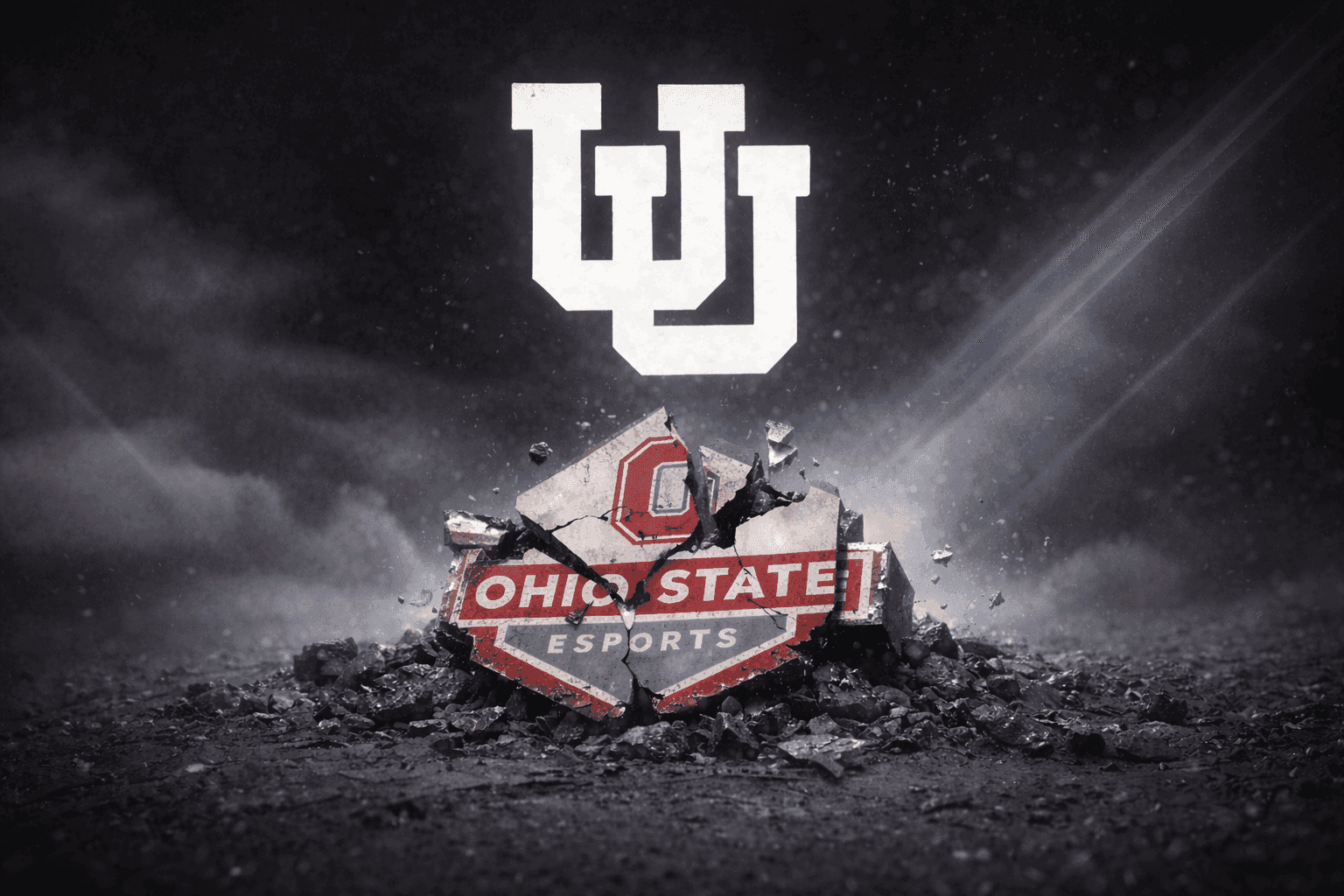
Utah Valorant had a rough time during Division ONE’s Spring Split regular season with 0-2 losses following them. That is until their battle against Ohio State where they scored their first map and game win, 2-1. Interviewing Utah Valorant’s head coach, Brock “Kalamari” Allen, and their controller player, Thomas “Onstage” McDonnell, here’s a look into Utah Valorant’s win.
Kalamari -- Utah Valorant Head Coach
In the Fall Split, The Ohio State won, 1-2. How did you guys learn from it? How did it affect this time to help you win?
They were our first match in Division ONE ever, so I think losing to them in such a close match back then really motivated us, this time around, to get the run back on them. They also had some roster changes. We felt pretty confident coming into this with all the practice we've had since then, playing [against] teams like Maryville and Winthrop and learning how to play a bit more coordinated as a team. During that [previous] Ohio State game, we've only been a roster for a couple of weeks. I think we felt more prepared going into this game even if there were other extraneous circumstances during the match. I think we were just super well-prepped mentally for this game especially, which is what you need. You need a strong mental to play Valorant.
Utah may have made a mistake. Game 2 with one controller. It was a surprising comp. It even surprised the casters of what you guys were doing. If you would like to, go through that one-controller comp in game 2.
You see a lot of teams, especially these days, running Omen-Viper or some other combination. I honestly do think that the one-controller comp wasn’t necessarily our issue. It was how we were playing the comp itself. We were kind of running out of utility a little bit early and then our attack side defaulting wasn’t strong enough to accommodate for it. I think that’s ultimately where we faltered there. If you look at Ohio State’s comp, where they were playing that Harbor, they definitely were picking some of their own picks, stuff you don’t really see too often. It came down to decisions made on the day rather than the comp itself. I think also with the role issues we were having with our substitutes. It was just trying to make sure that everyone felt comfortable going into that map. At the end of the day, I still stand by the comp that we ran, even if it was a little bit unconventional.
It’s no surprise that Utah Valorant has been on a 0-2 streak up until now. Not only winning their first game but their first match in Division ONE’s Spring Split. How do you keep the players motivated through all those losses to get their first win?
One of the hardest things you have to deal with as a coach, not even remotely related to the game, is just maintaining player mentality, especially team morale. I think with a lot of teams, when things don’t work like you want them to, you tend to run into team conflict issues or clashing personalities that kind of bubble to the surface.
The big thing that I was trying to do during the whole time was try to reinforce the situation that we were in, especially because, with our roster, only a few of the players have played with each other before the season. I try to build more of a growth mindset in regards to Division ONE. On that first Ohio State match that we played back in the fall, I set in everyone’s head that this is our rock bottom. I don’t see us going below this. Every single game that we play, no matter the score line, if we can keep building at a solid enough pace, we can eventually overcome some of these strong opponents. We saw that when we played against Ohio State [in the Spring Split]. If you compare [the current Utah Valorant team] to how they were playing back in the fall, you would see a night-and-day difference there.
One thing that I noticed in the game, and the casters noticed too, is that every time Utah Valorant had a timeout, you guys would come out of that timeout stronger than ever, on a winning streak against Ohio State. It kind of became a good luck charm. What’s your coaching style? How do you best utilize those timeouts?
A little bit of background on me is I was previously an IGL (in game leader) for one of Utah’s previous rosters last year. Eventually, I made the swap to a coaching role this year, starting in the fall. I’m definitely still growing and developing, and I don’t think my style is super hardset, but I think a consistent theme for this semester has been my player-centric approach. I’ve been focusing a lot on building players individually so they feel like they can bring their best to the team. The work that I do, like you were mentioning with those timeouts, is I try to best reorient players and assign the strategy and ideas that they might not be thinking of in the heat of the match.
I think a lot of what you saw during Ohio State was that macro-correction that they were kind of lacking within themselves, especially given that we had to sub Graham ["D1," their IGL] out that day. I was making sure that our players could focus more on playing as a team with their strong gunplay and micro-abilities, and let me kind of worry about the macro in terms of a lot of that shotcalling. We were even able to convert some rounds that looked pretty bleak [with this method]. I think the guys were just really able to strut their stuff and show what they were able to do in that [Ohio State] match on Monday. To wrap that point up, I’m definitely still growing and there’s a lot I can still improve on, but I’m happy to see that I’m able to contribute.
Utah Valorant going into the game against Ohio State had 3 substitutes. How was your reaction or plan with having half your team be substitutes?
That’s another thing going into this semester. Sometimes when you have students who are full-time students, that’s what all of our players are doing, class conflicts and other things, like one of our players was observing Ramadan, we wanna make sure that our players are able to do school and observe religion and do everything. I believe that those things come before the game, which, as a coach, maybe you don’t wanna be hearing that from me. Coming into this series, all of our subs have played at least two or three matches. Some with not-so-great showings. Some with amazing showings. Just that little bit of experience, even though it says that they’re a sub on the website and that they aren’t there for every single match, they were able to show their skill and contribute to the team just like the starting roster would. I’ve been able to give my feedback to them on some of their games as well and kind of help build them up together with the rest of the squad. They were able to integrate pretty efficiently and play with the team pretty well, especially with Stradious and Tempest. Stradious was doing a super great job picking up some of the mid-routing in a lot of the games, and Tempest was playing super well off of Onstage on a lot of sight anchors and other hard situations to win that brought us a lot of rounds. I couldn’t be more happy with how our subs played.
Onstage -- Utah Valorant Controller
How do you outmaneuver strong shooters like Ohio State’s Hamburger and Bot?
Usually, I depend a lot on my utility and team play when it comes to getting around people who are mechanically challenging to go against. It was also a strong mechanical day for most of us. We were able to get a lot of gun fights off in a way that made [the match] seem a bit more equal. In a lot of ways, we depended on utility and team play.
Utah went into this game with 3 substitutes. Did that affect your confidence or were you more determined?
When it comes to substitutes, I’m sure other teams are very, very different, some play more often than others. It was definitely our first time not having our IGL [in-game leader], Graham “D1” on the team, because he had shown up for every other match we played in Division ONE. We leaned a lot more on an instinct-driven style, where it was a lot of rushes, mostly looking for kills rather than having preset plays that we had scrimmed and practiced beforehand. It was definitely a different mindset going into the game, but I don’t think it lacked any form of confidence. We were all there to win.
How do you alleviate the pressure [the Game 2 team composition] puts on you as the only controller?
The moment we started we lost that, because we haven’t run any form of comp with just us five. We mostly played what we were comfortable on. We went into the game and a couple of us made the comment “hey, we don’t have a second controller like we normally do.” I guess no one really paid any mind and made up the comp on the spot. It wasn’t great, so we decided to go back to double controllers for the next map. That was a lot more comfortable.
In terms of alleviating pressure, I think the issue was that we didn’t do a good job of that. If I were to go back and change anything, it would be to make me a more central point rather than an active point. Since I was on Clove, it was pretty difficult to make that change because you have to take fights on that agent. A different agent like Omen would’ve been a lot more team-oriented.
How did timeouts help you be focused to get those wins?
I think the timeouts were definitely intended to give the team a breather. When you play with three subs and a very instinct-based style, you can really fall victim to momentum. If we ever lose a certain amount of rounds, it’s always nice to have a timeout to fall back on to calm us down, let us recenter. Maybe the coach can give us a strategy for the round that just allows us to reset, then we were able to take the moment back pretty much every time.
How did it feel, if you remember, getting the game winning kills?
I’m pretty sure right before this my coach had zero faith we were going to win that round. We literally had no strategy and he said ‘just do the same as last round and then next round do so-and-so strategy.’ We ended up pulling off some type of miracle. I did like a random teleport play behind someone and got two kills.
When it came to the 2v2 clutch, I had a really good read on how their rotates were gonna go. I knew that they wouldn’t expect someone to peel off in a 2v2 situation rather than play the bomb. In that regard, I just felt confident going for the last two kills there. There’s just no way they’re gonna expect me, considering I killed one guy with a knife out. I think that I was pretty right in that scenario.
Utah has had a 0-2 streak up to this point. Now, winning not only your guys’ first game but also first map in the Spring Split. How do you keep your confidence or hope when you’re being followed by this 0-2 streak?
Well, what’s that terminology when you have nothing to lose? You get a pretty big boost that we go into every game with, going into it knowing we’re the underdogs, that people don’t expect a crazy amount to come from us. With that, you get added confidence to every play you do. Knowing that you’re not gonna be disappointing anyone, you can pretty much only go up. There might be even more nerves and confidence going into the Boise State match with one win under our belt as people expect victory and a close match.
Ohio State had strong pistol rounds. How could you improve or battle against it?
Death match with classics? I have no idea. When it came to the Ohio State game, we treated it like any other gun round. It was like a rush. With gun rounds, we depend a lot on utility and, with pistol rounds, you get the least amount of utility. It was a bit of a discomfort when it came to hitting a site or anything like that. When it comes to improving, I think we’re just gonna be looking drastically different with our IGL calling the correct pistol round. I’m a bit more confident that’s not gonna happen. I think it was also a bad pistol day for the team. I don’t think it was anything we’re going to take to heart too much.
Ohio State VS Utah Match
Utah Valorant’s first win was a much-needed spark for their players after a 0-2 losing streak. Their coach, Kalamari, and controller player, Onstage, helped shine light into strategies that helped them get this win, and improve as a team in the future. While Utah Valorant didn’t make the playoffs this Spring Split, there are clear signs of improvement, which is always exciting to see. They can take their newfound game win and, hopefully, return stronger once more in a future Division ONE competition.
Articles by Caroline

DivisionONE's First Pro Class: Six Signings and a Shot at the LCS
By Caroline Henry · Wed Sep 23 2026
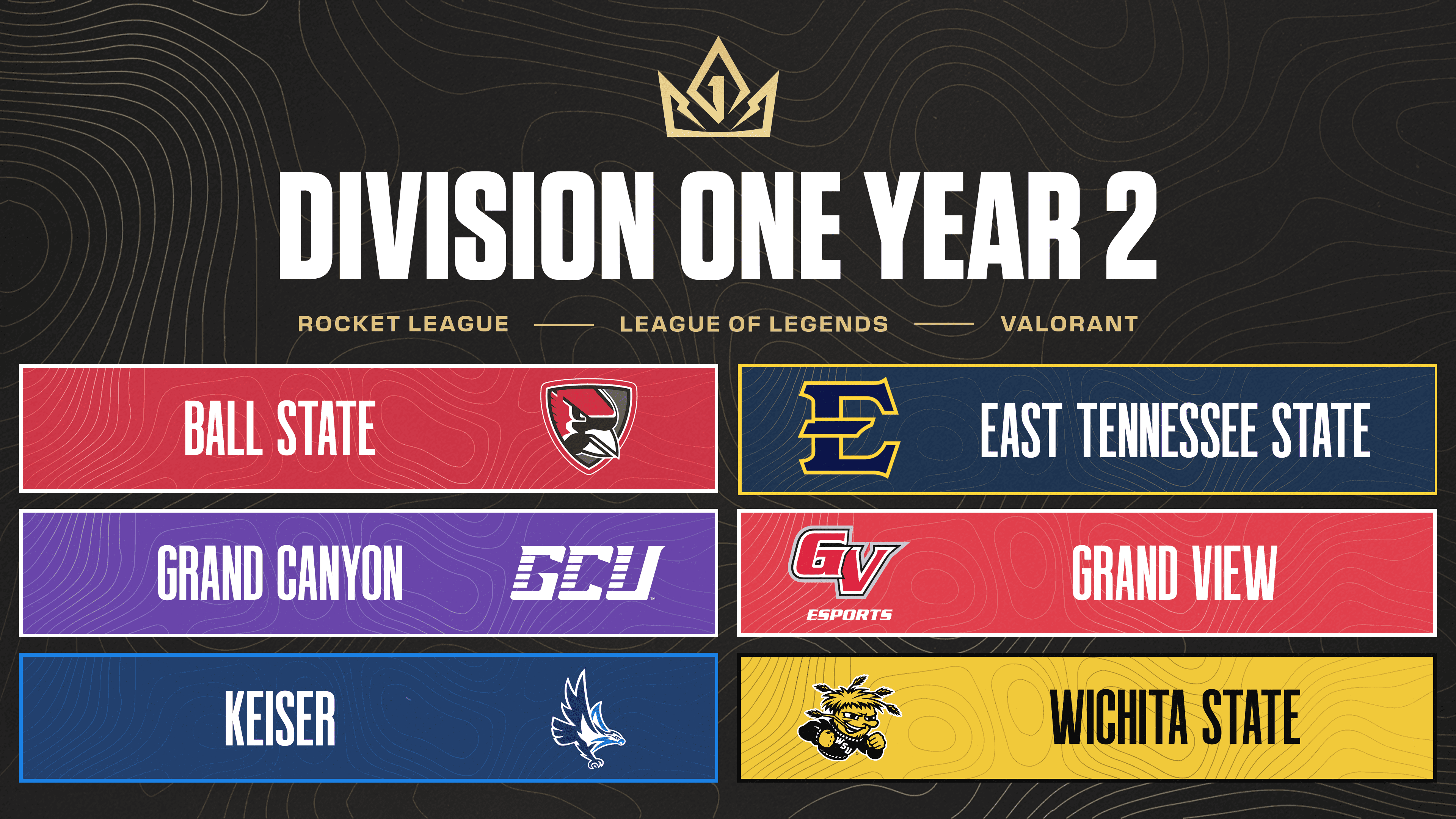
A recap of all of the players in DivisionONE's first year that have gone pro and where they currently are now, and a brief look at Maryville's recent League of Legends Promotional Tournament qualification.
Articles like this
DivisionONE's First Pro Class: Six Signings and a Shot at the LCS
By Caroline Henry · Wed Sep 23 2026
A recap of all of the players in DivisionONE's first year that have gone pro and where they currently are now, and a brief look at Maryville's recent League of Legends Promotional Tournament qualification.